Home/Build Your Own
Build your
own trailer
Pick your size, choose the fit-out, see pricing and lead time in real time. Fourteen steps, a printable build sheet at the end, and a reference number you can quote on the phone.
Pick your size, choose the fit-out, see pricing and lead time in real time. Fourteen steps, a printable build sheet at the end, and a reference number you can quote on the phone.
Most manufacturer configurators end in a form. This one ends in a figure, because you are entitled to know roughly what something costs before you hand over a phone number.
The running total is indicative. It is built from real material and labour costs and in practice lands within a few percent of the final quote. What moves it is the things a configurator cannot know: whether your karts are an unusual width, whether the bench height changes the wall framing, whether your tow vehicle forces a weight target.
Once we have talked, the number stops being indicative. The quote is fixed in writing before we place the factory order and does not move afterwards — not for material costs, not for hours, not for anything we failed to anticipate. That risk is ours, and it is why we spend as long as it takes on the drawing.
Each platform has a base: five shop days at 16 ft, six at 20 ft, seven at 24 ft, nine at 28 ft and ten for the gooseneck. A lounge section adds three days for insulation and sealing. A full wrap adds three, because panels must cure before graphics. A generator bay and an A/C pack add two each. The counter on the right adds them up as you go.
The grid step is optional and takes about two minutes. It is the fastest way we have found to communicate where things actually go — far better than a paragraph describing it. Whatever you place there comes through with your build sheet and becomes the starting point for the CAD drawing on day one.
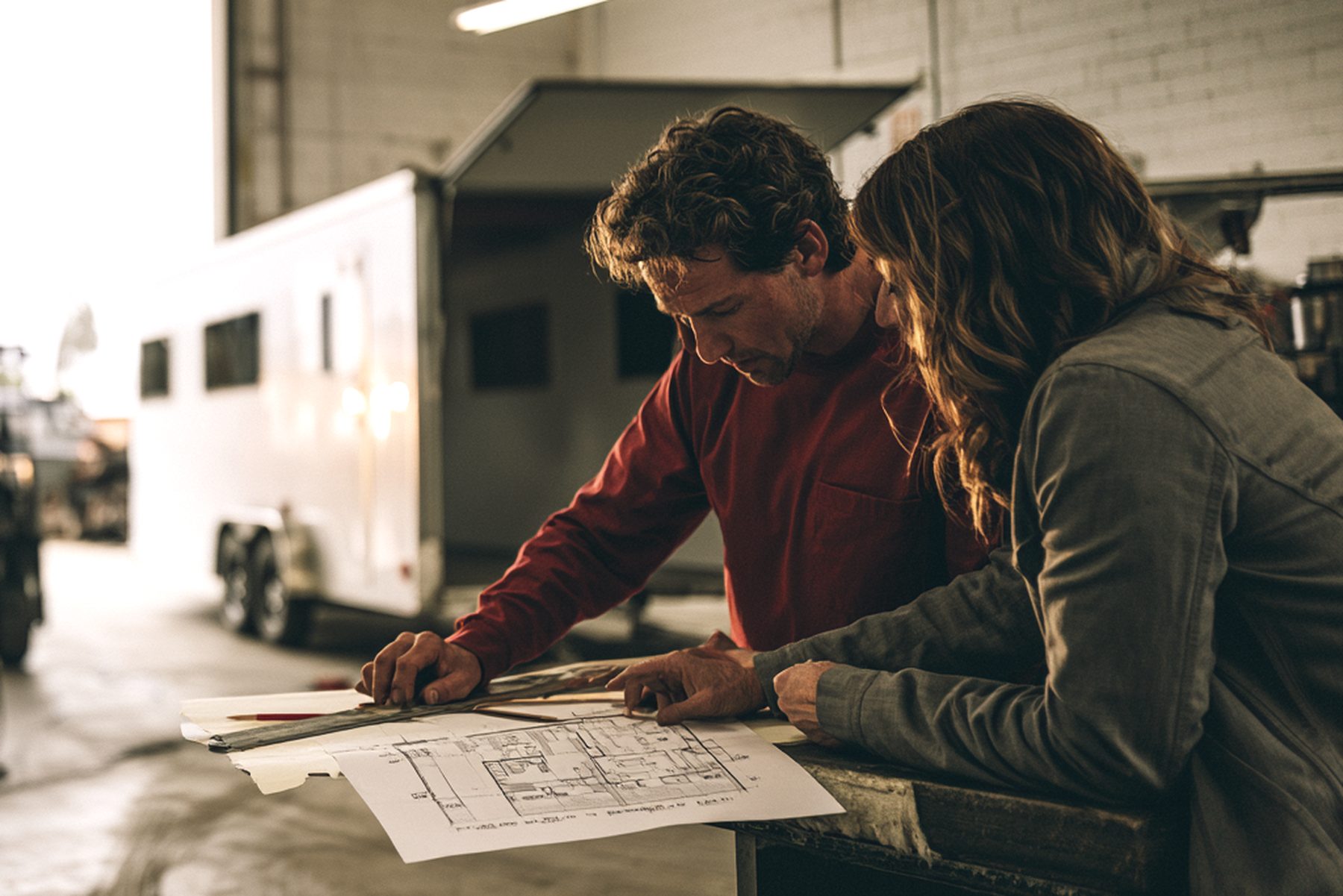
Configure something close, note your build reference, then tell us how you actually race. We reply within one business day with a layout drawing and a fixed price.
Send us your karts, your tire count, how many people travel with you, and whether you need to sleep in it. We’ll come back within one business day with a layout drawing and a fixed price — no configurator games, no “call for pricing”.